
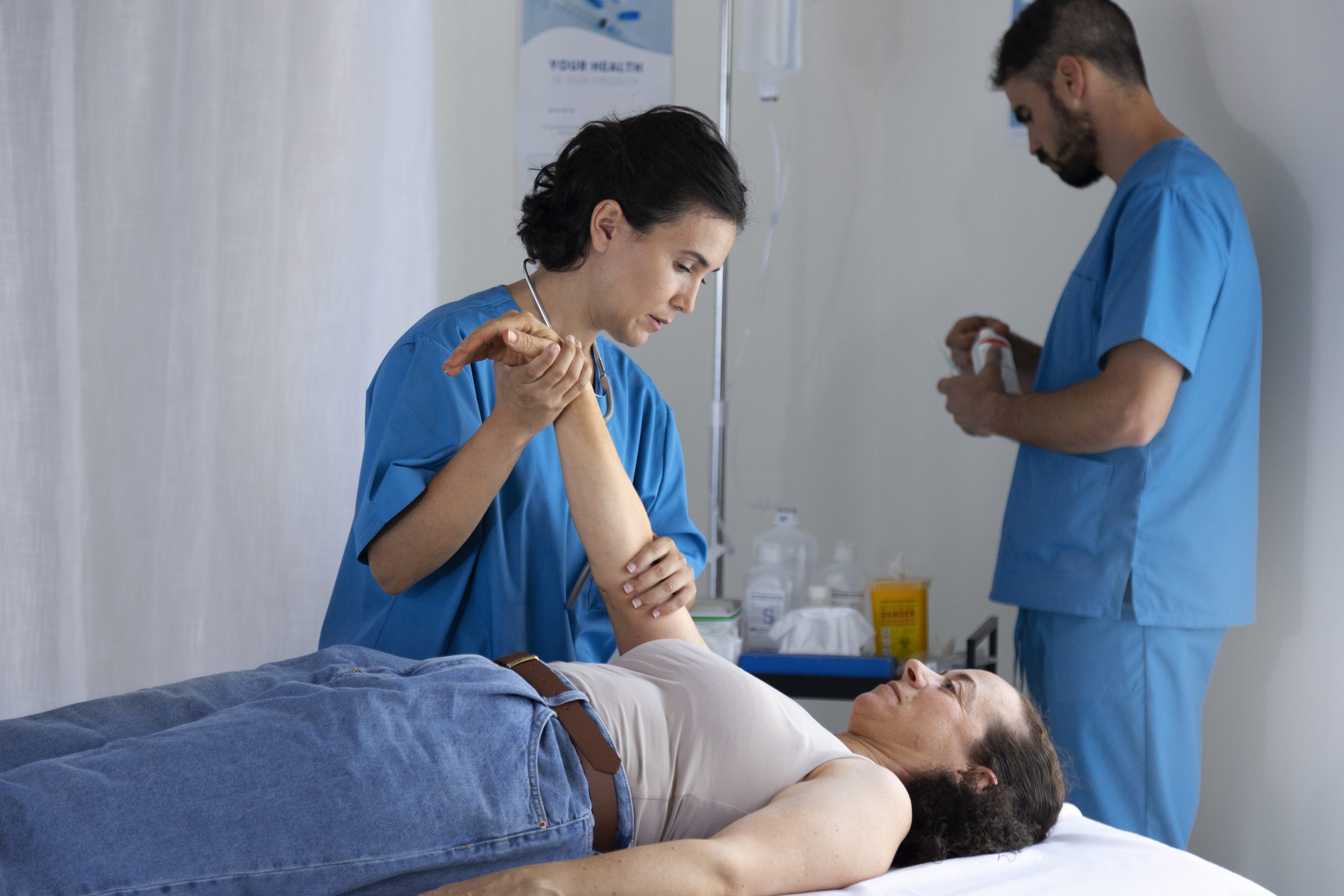
Why Shoulder Stiffness Can Be Challenging
Conditions such as frozen shoulder (adhesive capsulitis), post-surgical stiffness, or prolonged immobilization following injury can lead to significant limitations in shoulder movement. Over time, scar tissue and adhesions may develop within the joint capsule, making stretching or active exercises uncomfortable or ineffective.
For many patients, persistent shoulder stiffness not only impacts mobility but also diminishes overall quality of life. Everyday activities like dressing, grooming, or reaching for objects can become increasingly challenging. This highlights the importance of interventions performed by providers trained through MUA Training, who have the specialized skills to safely restore shoulder function and improve joint mobility.
How Shoulder Manipulation Under Anesthesia Works
During shoulder MUA, the patient is sedated under anesthesia, which allows the provider to move the shoulder joint through its full range of motion without causing pain. This controlled manipulation targets the tight tissues and adhesions that restrict movement.
Key Steps in the Procedure
Patient Preparation: The patient’s medical history is reviewed, and the shoulder is examined to determine the degree of stiffness.
Administration of Sedation: An anesthesiologist or trained provider administers sedation to ensure the patient remains comfortable throughout the procedure.
Gentle Manipulation: The provider carefully moves the shoulder joint in various directions, stretching the capsule and releasing adhesions.
Immediate Assessment: The shoulder’s mobility is reassessed after manipulation to confirm improvements in range of motion.
Because the patient is sedated, MUA allows for more aggressive yet controlled stretching than would be possible while awake, reducing discomfort and improving outcomes.
Benefits of Shoulder MUA
Manipulation under anesthesia offers several advantages for patients experiencing shoulder stiffness:
Restored Range of Motion
One of the primary benefits of MUA is the ability to restore mobility in a stiff shoulder. By targeting adhesions and tight connective tissue, patients often notice significant improvements immediately after the procedure.
Pain Relief
Limited shoulder movement can create tension and discomfort in surrounding muscles. Once mobility is restored, pain levels often decrease, and patients may find daily activities easier and less uncomfortable.
Improved Rehabilitation Outcomes
Some patients struggle to progress in physical therapy because stiffness prevents proper movement. MUA can enhance the effectiveness of post-procedure rehabilitation by providing a shoulder that is more responsive to stretching and strengthening exercises.
Recovery After Shoulder MUA
While the procedure itself is largely pain-free, recovery is an essential part of achieving long-term results. Patients typically experience mild soreness and swelling in the first few days, which can be managed with ice, rest, and anti-inflammatory medications.
Role of Physical Therapy
Post-procedure physical therapy is crucial to maintaining improvements in range of motion. Exercises focus on:
Strengthening surrounding muscles
Preserving newly restored mobility
Preventing scar tissue from reforming
Following a structured rehabilitation plan ensures that the benefits achieved during MUA are sustained over time.
Who Is a Candidate for Shoulder MUA?
Shoulder MUA is generally recommended for patients who:
Have not achieved sufficient mobility through physical therapy or conservative treatments
Experience persistent pain or functional limitations due to stiffness
Have no contraindications for sedation or anesthesia
A thorough evaluation by a trained provider helps determine whether MUA is the right option. Programs such as MUA Training, led by Bruce M. Fischer, equip practitioners with the skills to safely assess candidates and perform the procedure effectively.
Risks and Safety Considerations
Like any procedure, shoulder MUA carries some risks, including temporary soreness, minor swelling, or anesthesia-related reactions. Serious complications are rare when performed by trained providers who follow proper protocols.
Patients should communicate their full medical history, follow pre-procedure instructions, and adhere to rehabilitation plans to minimize potential complications.
Conclusion
Manipulation under anesthesia for the shoulder is a safe, effective procedure that can restore mobility, reduce pain, and improve the ability to perform daily activities. By addressing adhesions and tight connective tissue, MUA offers a solution for patients who have not found success with traditional therapies.
With proper evaluation, skilled technique, and post-procedure rehabilitation, patients can achieve meaningful improvements in shoulder function. Programs like MUA Training, led by Bruce M. Fischer, ensure that practitioners are trained to deliver this procedure safely, maximizing outcomes while minimizing risks. For individuals struggling with chronic shoulder stiffness, shoulder MUA may be the key to regaining mobility and improving overall quality of life.

About the Author
Bruce M. Fischer, D.C., C.C.S.P.
March 9, 2026
